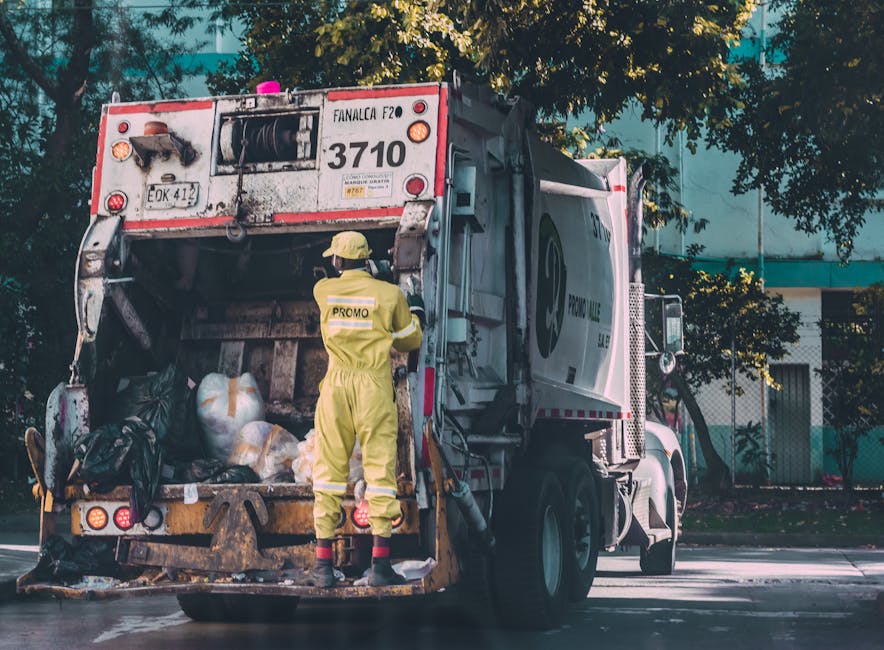
How Crews Calculate Quotes: Hidden Rubbish Removal Fees Explained
If you have ever looked at a rubbish removal quote and thought, "That seems fine... but what's not being said?", you are not alone. Hidden charges can creep into waste collection jobs in quiet little ways: a stair carry fee, a parking issue, extra labour for awkward access, or a surcharge for items that need careful handling. This guide breaks down How Crews Calculate Quotes: Hidden Rubbish Removal Fees so you can spot what is fair, what is unclear, and what should always be explained up front.
Whether you are clearing a loft in a terraced house, emptying an office after a move, or dealing with a pile of mixed household junk after a renovation, the way crews quote can feel oddly mysterious. It does not have to. Once you know the moving parts, the numbers make a lot more sense.
For a broader look at how pricing is structured, you can also review our pricing and quotes guidance, which sits alongside this article as a practical reference point.
Table of Contents
- Why How Crews Calculate Quotes: Hidden Rubbish Removal Fees Matters
- How How Crews Calculate Quotes: Hidden Rubbish Removal Fees Works
- Key Benefits and Practical Advantages
- Who This Is For and When It Makes Sense
- Step-by-Step Guidance
- Expert Tips for Better Results
- Common Mistakes to Avoid
- Tools, Resources and Recommendations
- Law, Compliance, Standards, or Best Practice
- Options, Methods, or Comparison Table
- Case Study or Real-World Example
- Practical Checklist
- Conclusion
- Frequently Asked Questions
Why How Crews Calculate Quotes: Hidden Rubbish Removal Fees Matters
Rubbish removal looks simple from the outside: a crew arrives, loads the waste, and drives away. But the quote behind that simple visit is often built from several small decisions. If you do not understand those decisions, it is easy to compare two prices that are not really comparable. One firm may look cheaper at first glance, then add charges later. Another may appear more expensive, yet include labour, disposal, and access costs from the start. That difference matters more than most people realise.
The main reason this topic matters is trust. Nobody enjoys awkward surprises when a bill lands. And with waste removal, those surprises usually come from practical realities rather than trickery. Think narrow hallways, broken lifts, heavy builders' waste, or a driveway that is just not usable on the day. Crews price those details because they affect time, effort, risk, and disposal cost. Fair enough. But the details should be visible before the job starts.
A well-constructed quote helps you budget properly, compare services, and make faster decisions. It also reduces disputes later. If you have ever stood in the doorway while three people debate whether the mattress counts as "standard waste" or "special handling", you know how messy that can get. Not exactly the calm start to a morning.
There is another reason it matters: some jobs involve safety, insurance, and recycling requirements that cannot be ignored. A good provider should be able to explain why a fee exists and what it covers. If they cannot, that is a signal to slow down and ask more questions.
Practical takeaway: the cheapest quote is not always the cheapest job. A clear quote with line-by-line transparency often saves more money, time, and stress than a low headline price followed by add-ons.
How How Crews Calculate Quotes: Hidden Rubbish Removal Fees Works
In practice, crews calculate rubbish removal quotes by balancing a few core inputs: volume, weight, labour, access, disposal type, and job complexity. That sounds technical, but it is usually quite straightforward once you unpack it. The estimate starts with what needs removing, then expands to include the real-world effort needed to complete the job properly.
1. Volume and load space
Most crews think first about how much space the waste will take in the truck. A few bulky items can fill a vehicle quickly, even if they do not feel especially heavy. Sofas, wardrobes, mattresses, broken furniture, and mixed household junk often take more room than expected. This is why a small pile can still attract a meaningful price. Space on the vehicle is not free, after all.
2. Weight and disposal class
Some waste is light but voluminous; some is compact but heavy. Builders' rubble, tiles, soil, and broken concrete can push up the quote because of vehicle payload limits and disposal charges. Mixed waste may need sorting, which also affects cost. Crews do not just move things around; they also have to get them into the correct disposal stream.
3. Labour time
If the job is a quick curbside pick-up, the labour element may be minimal. But if the crew has to navigate stairs, long pathways, tight corners, or multiple floors, the quote may increase. This is one of the most common places for hidden rubbish removal fees to appear. The more carrying, lifting, and handling involved, the more time and manpower the job uses.
4. Access conditions
Access can change everything. A house on a quiet street with parking nearby is very different from a top-floor flat with no lift and restricted loading. If the truck cannot park close by, the crew may need extra time to ferry waste back and forth. That extra labour often becomes part of the quote, sometimes as a separate access charge.
5. Disposal and recycling costs
Waste has to go somewhere. Depending on the contents, disposal fees can vary. Recycling certain materials is often preferable, and reputable operators will try to separate what can be reused or recycled. You can learn more about this approach through our recycling and sustainability approach, which helps explain why mixed loads are not all treated the same way.
6. Special handling items
Some items need extra care. Paint, electricals, fridges, mattresses, dismantling work, or awkward garden waste can all influence the final price. It is not just about lifting. It is about preparing, separating, and managing the item safely and lawfully. To be fair, a crew that quotes carefully here is usually doing you a favour.
7. Hidden fee triggers
This is the bit people often miss. Hidden fees tend to appear when the real job differs from the description given at enquiry stage. Common triggers include:
- extra waste added on arrival
- more stair carrying than expected
- limited parking or waiting time
- items requiring dismantling
- heavy materials mixed with general junk
- job delays caused by access problems
- special disposal for certain materials
The best crews do not spring these on you. They explain them before loading begins. That is the difference between a quote and a guess.
Key Benefits and Practical Advantages
Understanding how crews build quotes gives you more control. That is the real benefit. When you know what affects the price, you can describe the job more accurately, compare providers more fairly, and avoid paying for misunderstandings. Simple, but powerful.
Better budget planning
You can plan ahead instead of reacting to a bill. This is especially useful for house moves, office clearances, and renovation projects where costs can stack up quickly. Even a small surprise fee can throw off a tidy budget. Nobody wants that late in the month.
Fewer disputes
If the quote clearly states what is included, both sides know where they stand. That matters when a job is messy or physically demanding. Honest pricing reduces the back-and-forth that often happens after the van has already been loaded.
More accurate comparisons
Two quotes can look similar but include very different things. One may cover labour, lifting, and disposal; another may not. Once you understand quote structure, you can compare like for like instead of just chasing the lowest number.
Safer and more efficient jobs
When crews know the full picture, they can bring the right team size, tools, and vehicle. That usually means the job gets done faster and more safely. A rushed, underquoted job often causes friction. And, frankly, nobody enjoys a stressful clearance with a van blocking the street and everyone guessing.
Better recycling outcomes
Clear information about waste type helps crews separate recyclable materials more effectively. That can support better sorting and reduce avoidable disposal waste. If your provider has a strong environmental focus, that is worth noticing.
Who This Is For and When It Makes Sense
This topic matters to anyone booking rubbish removal, but some people feel the impact more than others. If you are managing a tight budget, working to a deadline, or dealing with a property full of mixed items, quote clarity becomes very important very quickly.
You will especially benefit from understanding fee structures if you are:
- a homeowner clearing lofts, garages, sheds, or garden waste
- a tenant needing to remove leftover junk before checkout
- a landlord or letting agent arranging end-of-tenancy clearance
- a builder or contractor with mixed site waste
- an office manager coordinating a workplace declutter
- someone handling a bereavement clearance or sensitive household clean-out
In those situations, the job is rarely just "take the rubbish away". There may be stairs, fragile items, difficult access, or emotional pressure. That is where a careful quote makes a real difference. It gives the job some structure, which is oddly reassuring when everything else feels a bit chaotic.
If you want to understand the company behind the pricing approach, take a look at about us for a sense of how the service is presented and what it stands for.
Step-by-Step Guidance
If you want to avoid hidden rubbish removal fees, the best approach is to treat the quote process like a short fact-finding exercise. Not a negotiation. Just a clear exchange of information.
Step 1: List everything that needs removing
Do not describe the job too loosely. "A bit of junk" is too vague to price properly. Instead, name the items: wardrobes, bed frames, mattresses, bags of general waste, broken appliances, garden clippings, rubble, or office chairs. A more complete list gives the crew a better starting point.
Step 2: Explain access honestly
Be upfront about stairs, distance from the road, parking restrictions, lifts, coded entry, or shared hallways. If the crew has to carry items a long way, the quote may need to reflect that. Better that than a surprise later.
Step 3: Share photos if possible
Photos are one of the most effective ways to reduce pricing errors. A few clear images from different angles help crews judge volume, load type, and access. It takes two minutes and can save a lot of confusion. Sometimes more than you think.
Step 4: Ask what the quote includes
Ask whether the price includes labour, loading, disposal, recycling, VAT if applicable, and any access-related charges. Also ask whether items will be dismantled or whether that would cost extra. The answer should be plain English, not a puzzle.
Step 5: Ask what could change the price
This is the question that prevents most problems. Ask directly: "What would make this cost more on the day?" If the provider gives you a vague answer, keep going. A good operator should be able to tell you the triggers clearly.
Step 6: Confirm timing and site conditions
If the quote depends on arrival time, parking access, or a specific collection window, confirm that early. On busy streets or in tighter neighbourhoods, timing can affect everything from labour to loading speed.
Step 7: Get the final agreement in writing
Even a simple written confirmation helps. It does not need to be formal or overcomplicated. It just needs to capture what is included and what is not. A message, email, or booking confirmation can be enough if it is clear.
Short version: describe the waste accurately, explain access honestly, and ask what can change the price before anyone turns up.
Expert Tips for Better Results
After enough rubbish removal jobs, a few patterns become obvious. The most efficient quotes usually come from customers who give crews the full picture early. That does not mean you need to know every technical detail. Just enough to let the pricing be fair.
Be specific about mixed loads
Mixed loads are where fees can get messy. A load containing furniture, black bags, rubble, and electrical items may need different disposal treatment. If you bundle everything into one generic description, the quote may be too low or too uncertain.
Separate what can be left on the kerb
If some waste can be placed outside safely and legally, say so. Curbside collections can be quicker and sometimes cheaper than indoor loading. But only if the access and local conditions make that sensible. No point trying to be clever if it causes a parking headache.
Ask for a "what's included" breakdown
You do not always need an itemised invoice, but a simple breakdown helps. Labour, disposal, sorting, and any special handling should be clear enough to understand. If everything is wrapped into one figure with no explanation, ask for more detail.
Watch for vague wording
Phrases like "starting from" or "subject to inspection" are not automatically bad. They are normal in this industry. But they should come with a clear explanation. If a quote feels airy and open-ended, treat it with caution.
Keep a little buffer in your budget
Even with a good quote, small job-day changes can happen. A spare cushion helps if a few extra items appear or access is worse than expected. It is just sensible, really.
Use the provider's support pages
Trust signals matter. A company that clearly publishes its health and safety policy, insurance and safety information, and payment and security details is usually taking the operational side seriously too. That does not guarantee a perfect experience, but it is a strong sign of order behind the scenes.
Common Mistakes to Avoid
Most hidden rubbish removal fees do not come from a sinister plan. They come from incomplete information, rushed booking decisions, or assumptions. That said, some mistakes are very avoidable.
- Giving a vague waste description: "House clearance" is not enough if the job also includes rubble, appliances, and loose loft insulation.
- Ignoring access details: Two flights of stairs can change a job. A lot.
- Assuming all quotes are equal: They are often not. Compare the inclusions carefully.
- Forgetting parking constraints: This is a classic source of delays and extra labour.
- Not asking about excluded items: Some materials may require separate handling or different disposal routes.
- Adding extra waste on the day: Crews can usually handle it, but it may shift the price.
- Choosing price only: The cheapest quote can end up being the most expensive once add-ons appear.
One small but common issue: people forget that a single bulky item can create more work than several smaller bags. A broken wardrobe down three narrow stairs is not the same as five bin bags by the front gate. Not even close.
Tools, Resources and Recommendations
You do not need fancy tools to get a better quote, but a few simple things make life easier. A phone camera, a rough item list, and a bit of time to ask questions can transform the whole process.
Useful things to prepare before requesting a quote
- clear photos of the waste from different angles
- a list of large or awkward items
- details about stairs, lifts, and parking
- any deadlines, such as end-of-tenancy or renovation dates
- notes on whether items are indoors or already outside
Helpful pages to review
If you are comparing providers, these pages can help you make a more confident decision: pricing and quotes, terms and conditions, and contact us for direct questions before booking.
Recommendation for clearer decisions
Keep your own mini record of what was quoted. Even a note on your phone is enough. Write down the date, the main items, and any conditions discussed. If something changes later, you have a reference point. That small habit can save an awkward conversation.
Law, Compliance, Standards, or Best Practice
Rubbish removal is not just a logistics job; it also touches safety, duty of care, and proper disposal practices. While the exact legal duties can vary depending on the waste type and the job setup, a trustworthy provider should be able to work within standard UK expectations and explain what they are doing in plain language.
From a practical point of view, best practice usually includes:
- clear quotation terms before the job starts
- safe manual handling and team lifting where needed
- appropriate disposal routes for different waste types
- recycling separation where possible and sensible
- public liability and operational insurance where relevant
- transparent handling of complaints or corrections if something goes wrong
For customers, this means you should never feel pressured into agreeing to unclear terms on arrival. If the job changes materially, the change should be explained. If the crew cannot safely remove an item as planned, that should also be discussed honestly.
You can review supporting policy pages such as the complaints procedure, terms and conditions, and health and safety policy to see how a more structured service communicates responsibility and process.
One small but important note: if you are disposing of items that may be regulated, hazardous, or difficult to classify, ask for guidance before booking. That is better than assuming the crew will simply "sort it out" later. Sometimes they can. Sometimes they cannot. Better to know early.
Options, Methods, or Comparison Table
Different pricing methods create very different customer experiences. Some are simple and transparent. Others look easy at first, then become less friendly when the job is on the driveway.
| Pricing method | How it works | Pros | Potential downsides |
|---|---|---|---|
| Visual estimate | Crews judge the job from photos or a short description | Quick, convenient, useful for standard loads | Can miss access issues if details are vague |
| On-site quote | The crew inspects the waste before confirming price | More accurate for awkward or mixed jobs | May take longer, and the final price can shift if the job differs from the description |
| Volume-based pricing | Price depends mainly on how much truck space is used | Easy to understand, common for many clearances | Heavy waste or special handling may still trigger extra cost |
| Job-complexity pricing | Quote reflects labour, access, sorting, and disposal difficulty | Fair for complex or tricky removals | Can feel less straightforward unless clearly explained |
For many customers, the best option is whichever one gives the clearest explanation of what is included. Simplicity is good. Transparency is better.
Case Study or Real-World Example
Here is a realistic example. A customer books a quote for removing a few items from a first-floor flat: a sofa, a mattress, several bags of clothing, and some broken shelves. The initial estimate looks reasonable. Then, on arrival, the crew finds that the lift is out of service, the stairwell is narrow, and parking is two streets away. Suddenly the job is not the same job anymore.
What happens next depends on the provider. A careful crew will explain why the price has changed before proceeding. They may say the extra carrying time, labour, and parking challenge were not clear at booking stage. If they are professional, they will keep the tone calm and factual. No drama. Just the facts.
In a better version of the same story, the customer had already mentioned the lift problem, sent photos, and noted the parking restriction. The quote was slightly higher at the outset, but the collection went smoothly and the bill matched expectations. That is the quieter win. The sort that does not sound exciting, but saves everyone a headache.
Another common scenario involves garden waste. A pile of branches and old fencing may look light, but once loaded, it fills the vehicle quickly and takes more time than expected. If the crew had only been told "some garden bits", the quote could be off. If they were told exactly what was there, the price would make more sense from the start.
Practical Checklist
Use this before you book. It takes a minute or two, and it can save a lot of hassle later.
- Have I listed every main item to be removed?
- Have I explained whether the waste is indoors, outside, upstairs, or in a loft?
- Have I mentioned stairs, lifts, long carries, or parking restrictions?
- Have I asked what the quote includes?
- Have I asked what could increase the price on the day?
- Have I shared photos if possible?
- Have I checked whether any items need special handling?
- Have I compared more than one quote if the job is large or complex?
- Have I read the provider's terms and conditions?
- Do I understand the payment process and security approach?
If you can tick most of those boxes, you are already ahead of the game. Honestly, that is where most expensive surprises get stopped.
Conclusion
Knowing how crews calculate quotes is not about becoming suspicious. It is about becoming informed. Once you understand the building blocks of a rubbish removal price, hidden fees become much easier to spot and much harder to justify. That helps you compare services properly, budget with confidence, and choose a provider that communicates well from the outset.
The best rubbish removal jobs feel simple because the details were handled early. The waste gets described clearly, access is discussed honestly, and the quote reflects the real work involved. It sounds almost boring when written out like that. In practice, boring is good. Boring means no surprises.
If you want a clearer route to booking, start by reviewing the company's public information pages, checking the quote process, and asking direct questions before the crew arrives. That little bit of preparation can save money, time, and a fair amount of stress.
Get a free quote today and see how much you can save.
And if you are still comparing options, trust your instincts a bit. The right provider will not rush you, dodge questions, or hide the important bits. That, more than anything, is what gives you peace of mind.
Frequently Asked Questions
What are hidden rubbish removal fees?
Hidden rubbish removal fees are extra charges that appear when the actual job is more complex than the original description. Common examples include difficult access, extra labour, heavy waste, or special disposal needs. A transparent provider should explain these before work begins.
Why do rubbish removal quotes change on the day?
Quotes can change if the waste amount, access conditions, or item types are different from what was originally described. If the crew discovers stairs, long carries, additional waste, or restricted parking, the quote may need to be updated fairly.
How can I avoid surprise charges from a rubbish removal crew?
Be specific about what needs removing, share photos, explain access details, and ask what is included in the quote. Also ask what could increase the price on arrival. That one question does a lot of heavy lifting.
Is a cheap rubbish removal quote always a bad sign?
Not always, but a very low quote can be missing key costs such as labour, disposal, or access fees. The safest approach is to compare what is included rather than just looking at the headline number.
Do crews charge more for stairs?
They often do if stairs add significant labour or time. A ground-floor curbside job is usually easier than carrying waste down several flights in a narrow stairwell. The difference is practical, not random.
Can I get a rubbish removal quote from photos?
Yes, in many cases photos are one of the best ways to get a fair estimate. Try to include wide shots, close-ups, and any awkward access points so the crew can judge the job accurately.
What should a rubbish removal quote include?
A good quote should clearly state what waste is being removed, whether labour and loading are included, how disposal is handled, and whether any conditions might change the price. The more transparent, the better.
Are recycling fees included in rubbish removal quotes?
Sometimes they are included within the overall price, and sometimes they are reflected indirectly in the quote structure. It depends on the provider and the type of waste. If recycling matters to you, ask how it is handled.
Do I need to be present for the quote?
Not always. For simpler jobs, photos and a clear description may be enough. For larger, awkward, or sensitive clearances, being present can help avoid misunderstandings. It is often the simplest route, to be fair.
What happens if I add more rubbish after the quote?
If extra waste is added, the price may need to be adjusted because the volume, weight, or labour requirement has changed. A good crew should explain the difference before continuing.
How do I know if a provider is trustworthy?
Look for clear communication, published policies, transparent pricing information, and sensible answers to your questions. Pages such as insurance and safety and terms and conditions can help you judge how professionally the company is run.
What if I'm unsure whether an item counts as special waste?
Ask before booking. If you are not sure about an item, describe it plainly and mention any labels, contents, or risk factors. It is better to clarify early than to guess and face a change in price later.
Where can I ask more questions before booking?
You can use the company's contact page to ask about your specific job, pricing concerns, or any access issues. A short conversation upfront often prevents a long one later.