Insurance and Safety for Junk Removal Waste Operations
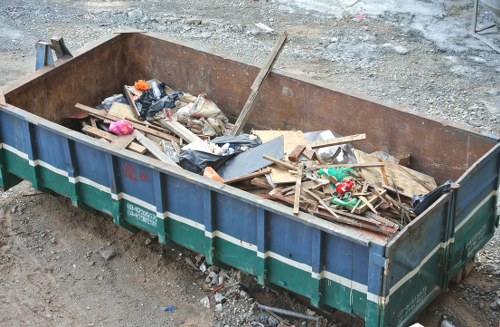 At the core of any reputable junk removal waste business is a clear, enforceable commitment to safety and insurance. Whether working on a residential clearance, a commercial rubbish clearance or a complex waste disposal job, our policies ensure that every task is covered by appropriate risk controls and financial protection. This page explains our approach to public liability cover, staff training, personal protective equipment and the risk assessment process that underpins safe junk removal and waste handling.
Public liability insurance is essential for any waste removal company offering junk removal services or waste collection. It provides cover for accidental injury to members of the public, damage to property and other third-party losses that can arise during a removal or waste haul. We maintain robust insurance limits to match the scale and nature of the jobs we undertake, ensuring clients and the wider community are protected financially in the unlikely event of a claim.
 Our public liability policy for waste removal is designed to cover common scenarios encountered during house clearances, commercial rubbish removal and transfer of bulky items. The cover includes legal costs, third-party bodily injury and property damage arising from our operations. Certificates of insurance are available internally for audit and externally on request when required by site managers, landlords or municipal authorities.
Training and Competency for Waste and Junk Clearance Crews
Staff training is a non-negotiable part of safe junk waste removal. Every operative completes a structured induction that includes manual handling techniques, safe lifting, traffic and vehicle safety, waste segregation and the identification of hazardous items. Training blends classroom instruction with practical on-site mentoring, and is refreshed regularly through toolbox talks and competency checks.
 Induction for new team members covers legal responsibilities, environmental obligations, and the correct use of equipment such as trolleys, sack trucks, lifting straps and tail-lifts. Specific modules address the safe handling of potentially dangerous materials found during clearances, such as asbestos-containing materials, chemicals, sharps and electronic waste. When required, specialized courses and third-party certifications are provided to ensure compliance with local waste regulations.
To maintain professional standards, ongoing training includes scenario-based drills, emergency response rehearsals and refresher courses in first aid and fire safety. Supervisors conduct regular spot checks and documented competency assessments so that every operative engaged in rubbish removal or junk removal services meets the company's safety standards on every job.
PPE, Equipment and Safe Working Practices for Junk and Waste Hauling
PPE (Personal Protective Equipment) is selected based on the hazards identified in site risk assessments and is mandatory for all jobs involving waste collection and junk removal services. Our standard PPE kit is maintained, inspected and replaced as necessary to ensure ongoing protection for staff and contract workers.
- High-visibility clothing for site and roadside work
- Protective gloves suitable for handling mixed waste and sharp objects
- Steel-toe boots or protective footwear for heavy loads
- Eye protection when cutting, breaking down items or working with dust
- Respiratory protection where airborne contaminants are present
 The company enforces mandatory PPE use and documents issue records for each operative. Supervisors carry spare PPE and conduct pre-start checks to confirm adequacy and fit. If a job introduces new hazards, PPE is upgraded following a review by our safety officer and the risk assessment team.
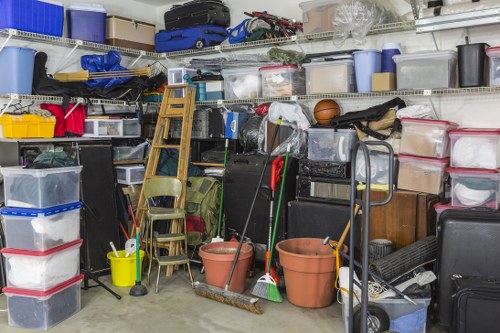 A formal risk assessment process drives safe junk removal and waste disposal operations. Before any job commences, our crew completes a written site assessment that identifies hazards, estimates risk levels and records control measures. The assessment follows a consistent five-step method: identify, evaluate, control, implement and review. Controls follow the hierarchy: elimination, substitution, engineering controls, administrative controls and PPE, to ensure the most effective mitigation is used.
Risk assessments for bulky-item removals include checks for structural load limits, electrical risks, confined spaces and manual handling demands. For toxic or hazardous waste, assessments specify segregation, containment, specialist handling and transport requirements. Detailed method statements accompany complex clearances and are available to client site managers when requested.
Monitoring and continuous improvement are integral. Incidents and near-misses are recorded, investigated and used to update training and procedures. Regular audits of insurance cover, crew competency, PPE condition and risk assessment records ensure that our rubbish removal and junk waste hauling services remain compliant with regulations and aligned with best practice.
In summary, robust public liability insurance, a structured training regime, properly maintained PPE and a systematic risk assessment process form the backbone of safe, professional junk removal and waste management. These combined measures protect the public, clients and our teams, and enable reliable, compliant performance across all waste removal and clear-out operations.