Recycling and Sustainability at Junk Removal Waste
Junk Removal Waste is committed to a measurable and ambitious sustainability program that prioritizes diversion, reuse, and low-impact collection. Our current recycling percentage target is to divert 75% of collected materials from landfill by 2028, focusing on reuse markets, donation streams, and high-quality recycling. This target applies to household clear-outs, commercial junk pickup, and bulky waste removal alike. We track the proportion of items salvaged, recycled, donated or sent to material recovery facilities and report progress annually to partners and community stakeholders.Low-Carbon Fleet and Efficient Operations
Our fleet of low-carbon vans and route optimization software reduces emissions per job. By using electric and hybrid vehicles where feasible and investing in efficient scheduling, we lower the CO2 footprint of every junk pickup and waste removal run. Efficient routing and load consolidation minimize empty miles; in many boroughs this approach aligns with local emission reduction plans. We also monitor fuel use and introduce telematics to ensure vehicles are maintained for peak efficiency. Reducing transport emissions is a core part of our sustainability promise.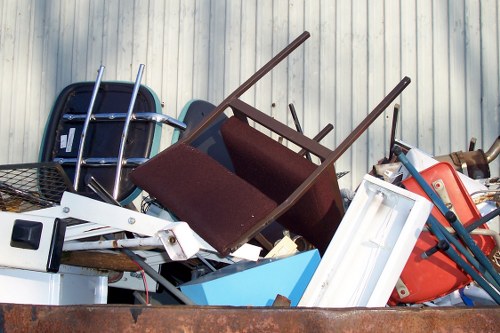
Strong Partnerships with Charities and Reuse Agencies
Partnerships with local charities, social enterprises and reuse centres ensure usable goods are kept in circulation. We coordinate direct donations and scheduled drop-offs, prioritizing social value and community need. Items commonly diverted include furniture, textiles, small appliances, electronics, and building materials. Our network includes shelters, community redistributions, and refurbishment workshops.- Clothing and textiles for resale or repair
- Furniture and appliances reclaimed for donation
- Electronics routed to certified e-waste refurbishers
Working with Local Transfer Stations and Materials Recovery Facilities
We operate closely with local transfer stations and materials recovery facilities (MRFs) to maximize recycling rates. By sorting at the source and using designated transfer stations, we ensure that paper, glass, metal, hard plastics and bulky wood are channeled to the correct processors. Many boroughs employ a household sorting system—separating food waste, garden waste and recyclables—and our collection practices are designed to complement these municipal schemes. This collaborative approach reduces contamination and improves the quality of recyclables entering the market.
Handling Specific Streams: Electronics, Mattresses, and Bulky Items
Our crews are trained to identify streams that require special handling. Electronic waste is separated and sent to certified recyclers or refurbishers; mattresses and bulky items go to mattress recycling partners or refurbishment projects where components are reclaimed. Metals and construction debris are routed to appropriate scrap and salvage yards, while untreated wood is often repurposed or processed into biomass where permitted. These targeted practices help increase our overall waste diversion and support circular-economy outcomes.We also recognize variation across neighborhoods: some boroughs have robust curbside separation while others rely on centralized sorting. To be effective in both settings, Junk Removal Waste adapts collection methods to local policies, ensuring proper sorting at point of collection and reducing downstream contamination that can lower recycling percentage results.
Sorting, Transfer, and Measurement Systems
Our operational model includes detailed sorting protocols at the kerbside and in mobile units, documented transfer to licensed facilities, and data-driven measurement of the recycling percentage target. We log weights, destinations and processing outcomes for each load. Key stages include: collection, initial segregation, delivery to transfer stations, and final processing at MRFs or specialist recyclers. Transparent tracking ensures accountability and gives partners confidence that diversion targets are being met.Community Benefits and Borough Collaboration
By aligning with borough waste strategies and community reuse schemes, our work generates local environmental and social benefits. Households benefit from reduced landfill fees and better material recovery; charities receive more reliable donations; and boroughs meet their municipal recycling goals more easily. Local collaboration also helps create training and employment opportunities in reuse and recycling sectors, strengthening circular economy jobs close to where waste is generated. Carbon Reduction and Future Commitments
We continuously invest in low-carbon vans, alternative fuels and electrification where infrastructure allows. Combining these investments with operational efficiencies helps us meet the stated recycling percentage target while reducing transportation emissions. Looking forward, we plan further expansion of partnerships with repair cafes, upcycling initiatives, and certified e-waste processors to drive greater material recovery. These steps support a pragmatic transition from linear disposal to circular material flows.
Carbon Reduction and Future Commitments
We continuously invest in low-carbon vans, alternative fuels and electrification where infrastructure allows. Combining these investments with operational efficiencies helps us meet the stated recycling percentage target while reducing transportation emissions. Looking forward, we plan further expansion of partnerships with repair cafes, upcycling initiatives, and certified e-waste processors to drive greater material recovery. These steps support a pragmatic transition from linear disposal to circular material flows.
Accountability, Education, and Ongoing Improvement
Junk Removal Waste publishes periodic summaries of diversion rates and program improvements to maintain accountability. We provide clear information on what can be donated, recycled or needs special handling, reinforcing borough-level separation rules. Our teams receive ongoing training to spot salvageable items and to reduce contamination. Education combined with measurement ensures long-term progress toward our diversion goal.Across all our services—commercial clear-outs, residential junk removal and scheduled junk pickup—we prioritize repair, reuse and high-quality recycling. This integrated approach reduces landfill dependence, supports community partners, and lowers greenhouse gas emissions through smarter logistics and low-carbon vans. By pursuing the recycling percentage target and strengthening ties with transfer stations and charities, we aim to set a practical example in sustainable waste removal.
Joining forces with boroughs, transfer stations and non-profits allows Junk Removal Waste to turn collected items back into resources rather than refuse. Our commitment is operational, measurable, and community-rooted: measured diversion, local partnerships and a low-carbon fleet together make sustainable waste removal a realistic outcome for the neighborhoods we serve.